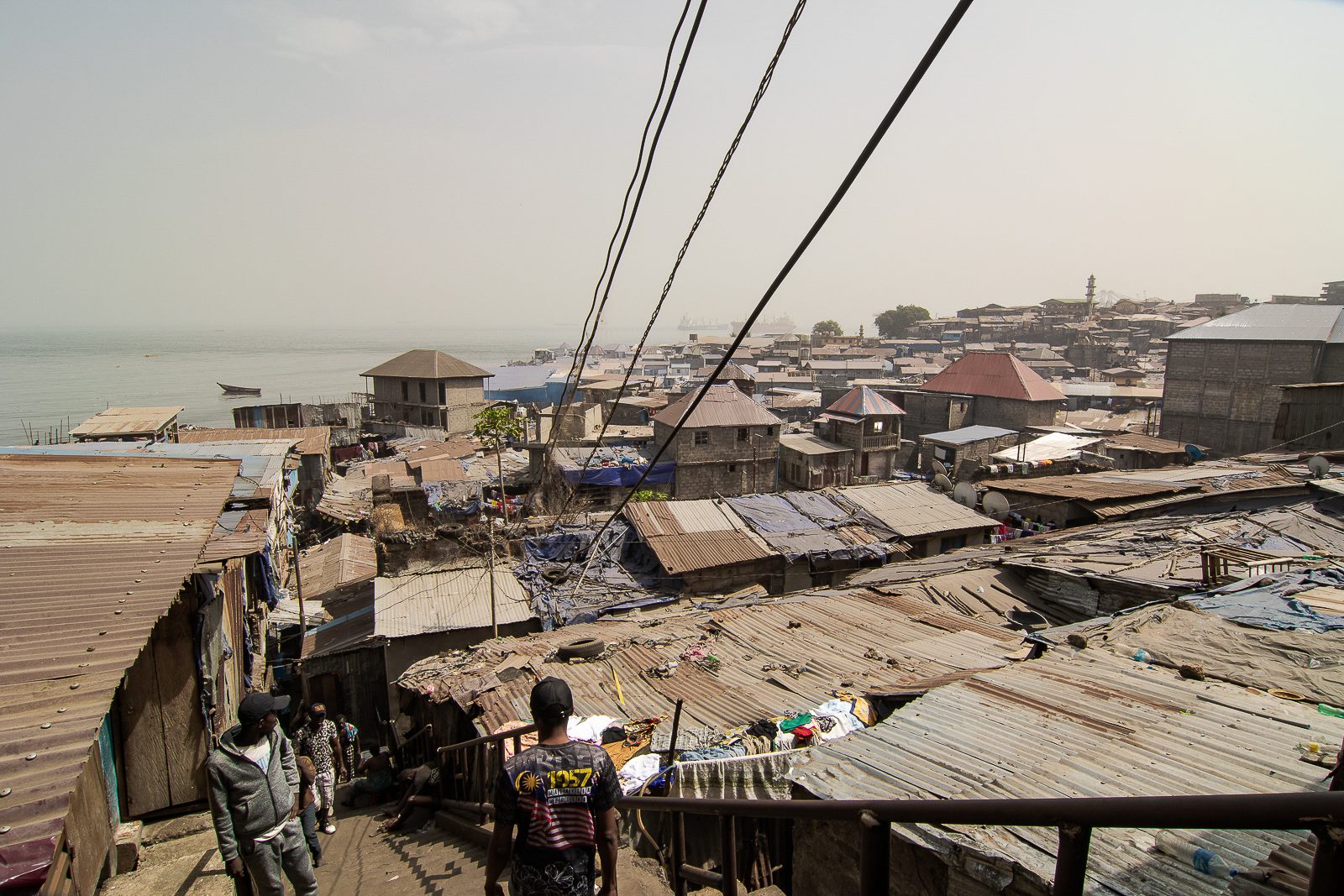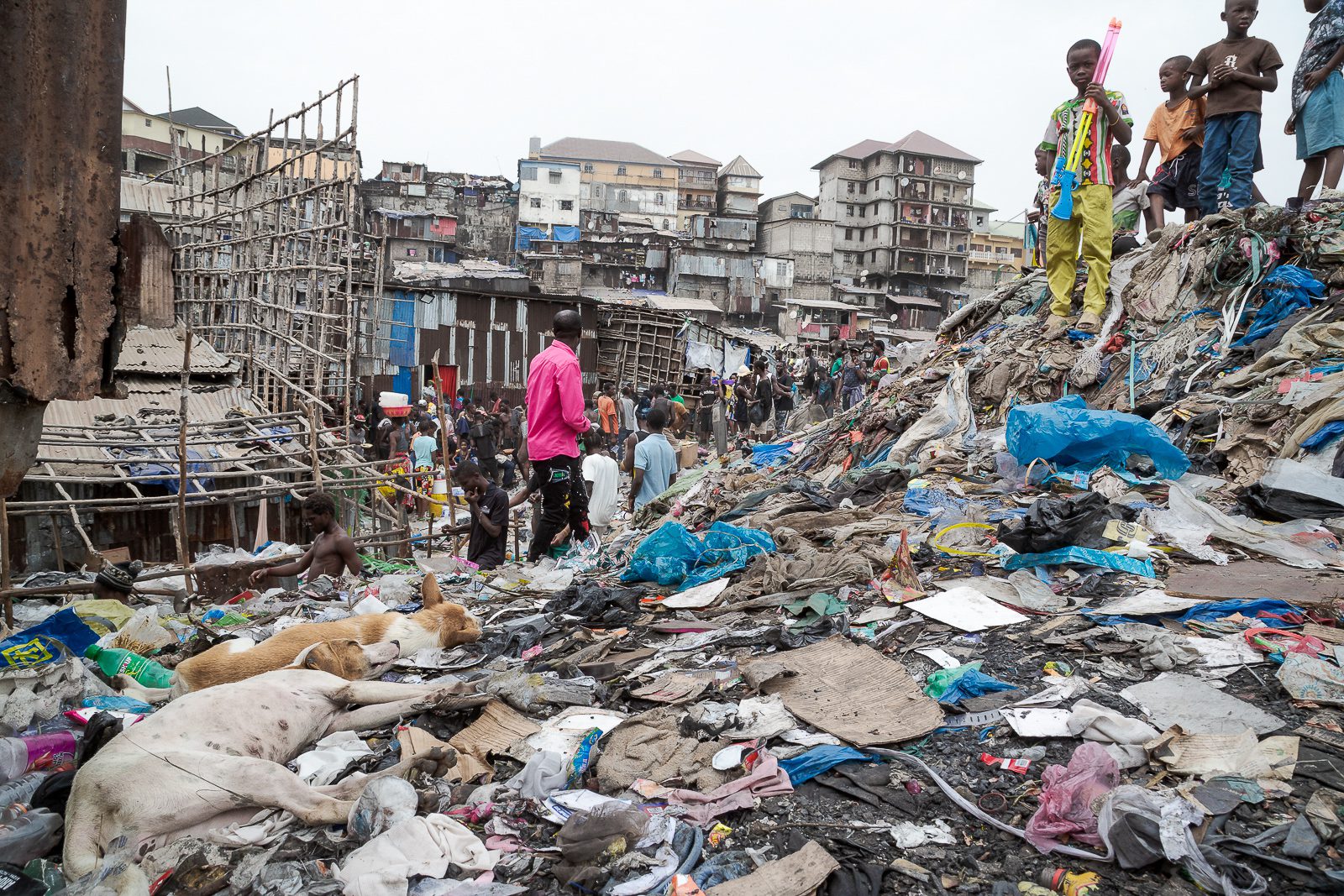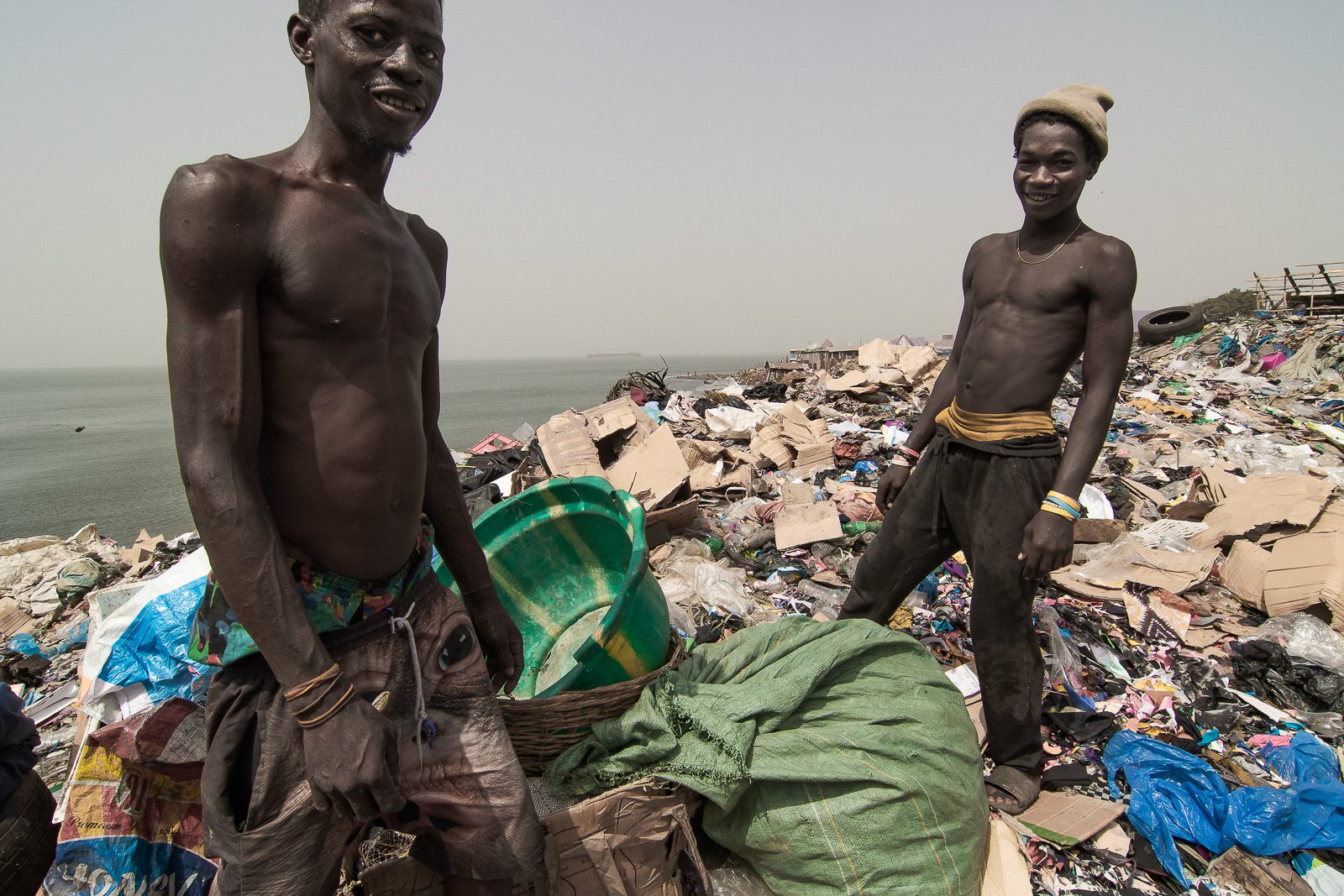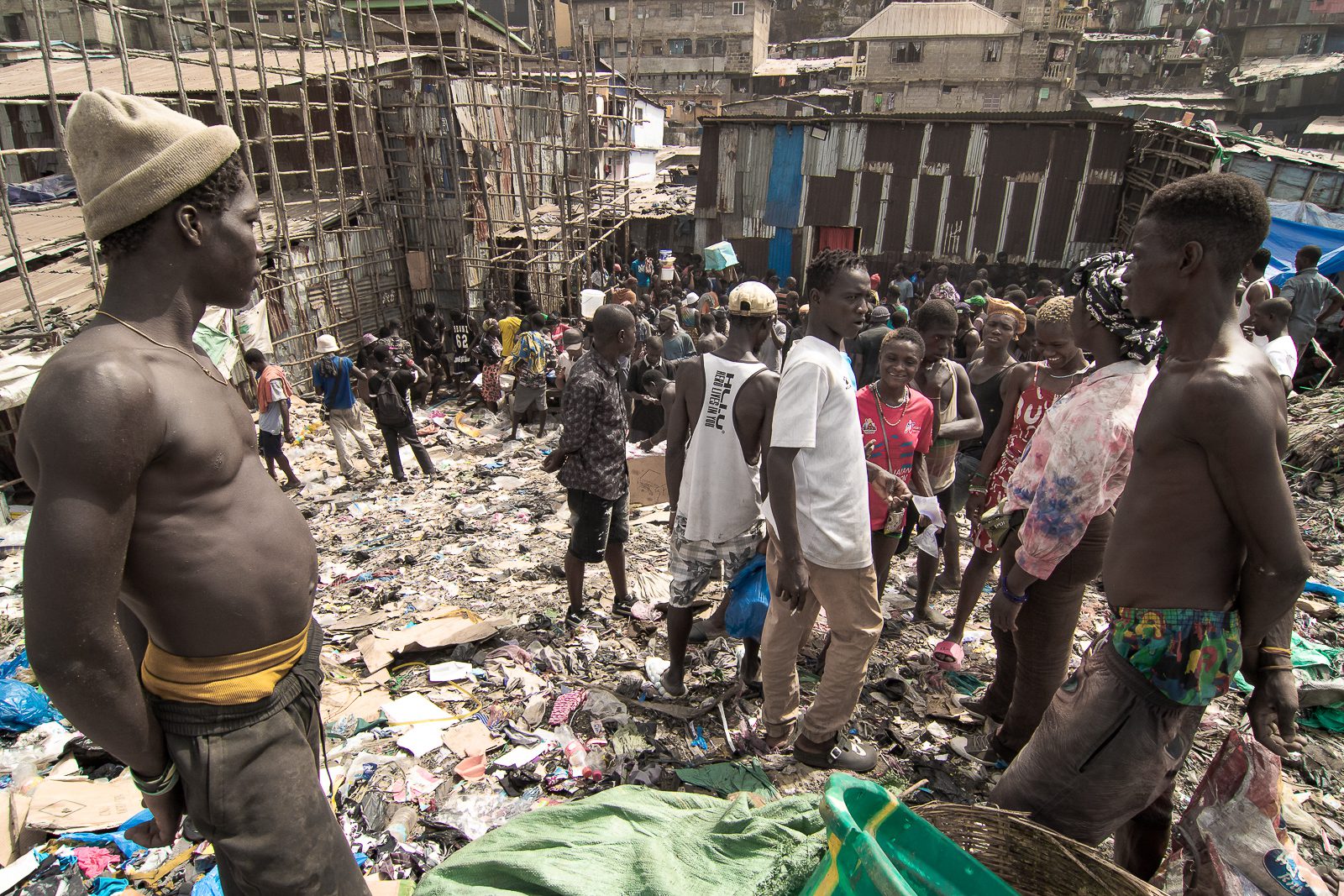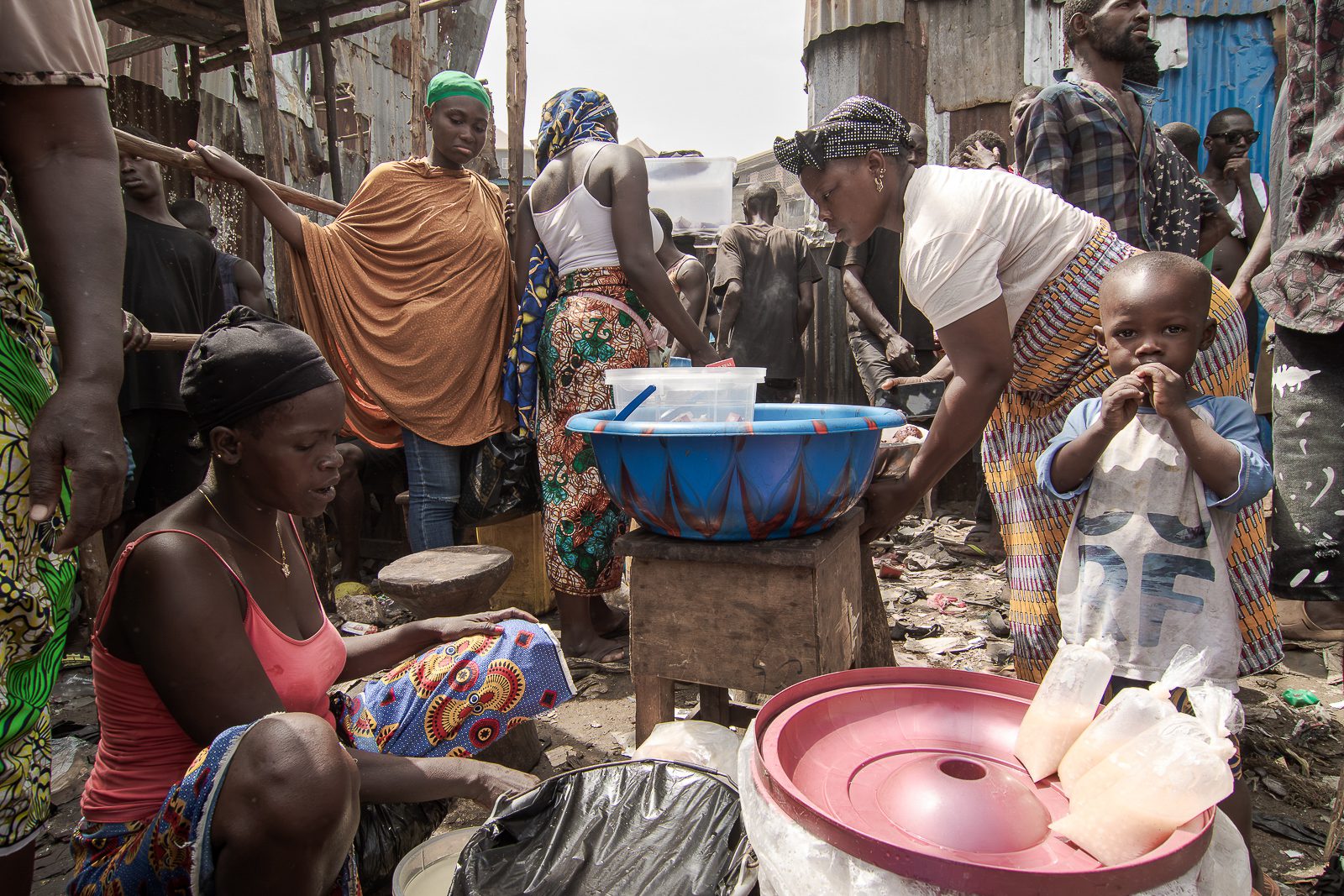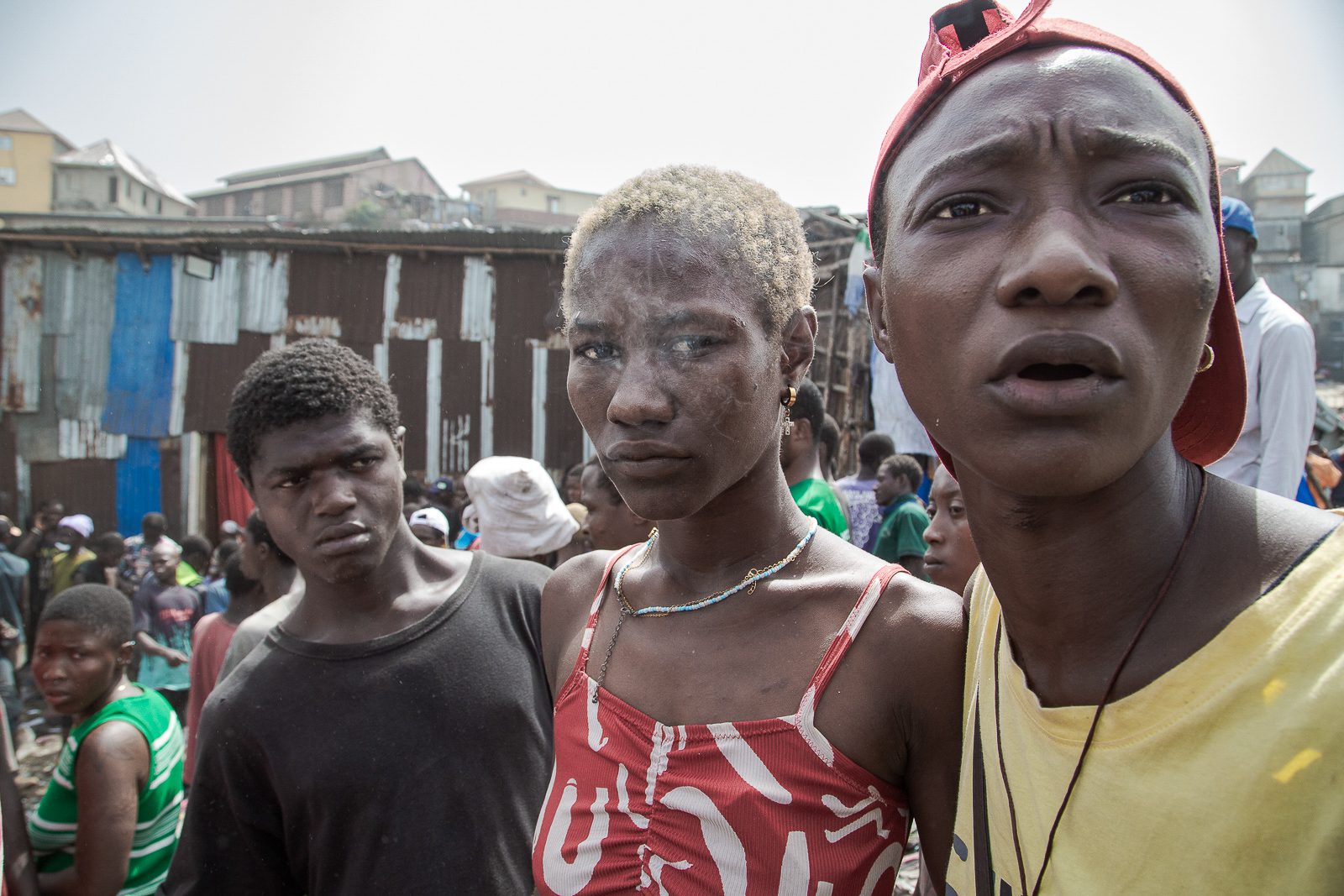
The keke (as tuk-tuks are known here) drops us at the roadside. From here, we make our way down towards the sea, following a steep flight of steps that leads into Susan’s Bay, one of Freetown’s slums, in the capital of Sierra Leone.
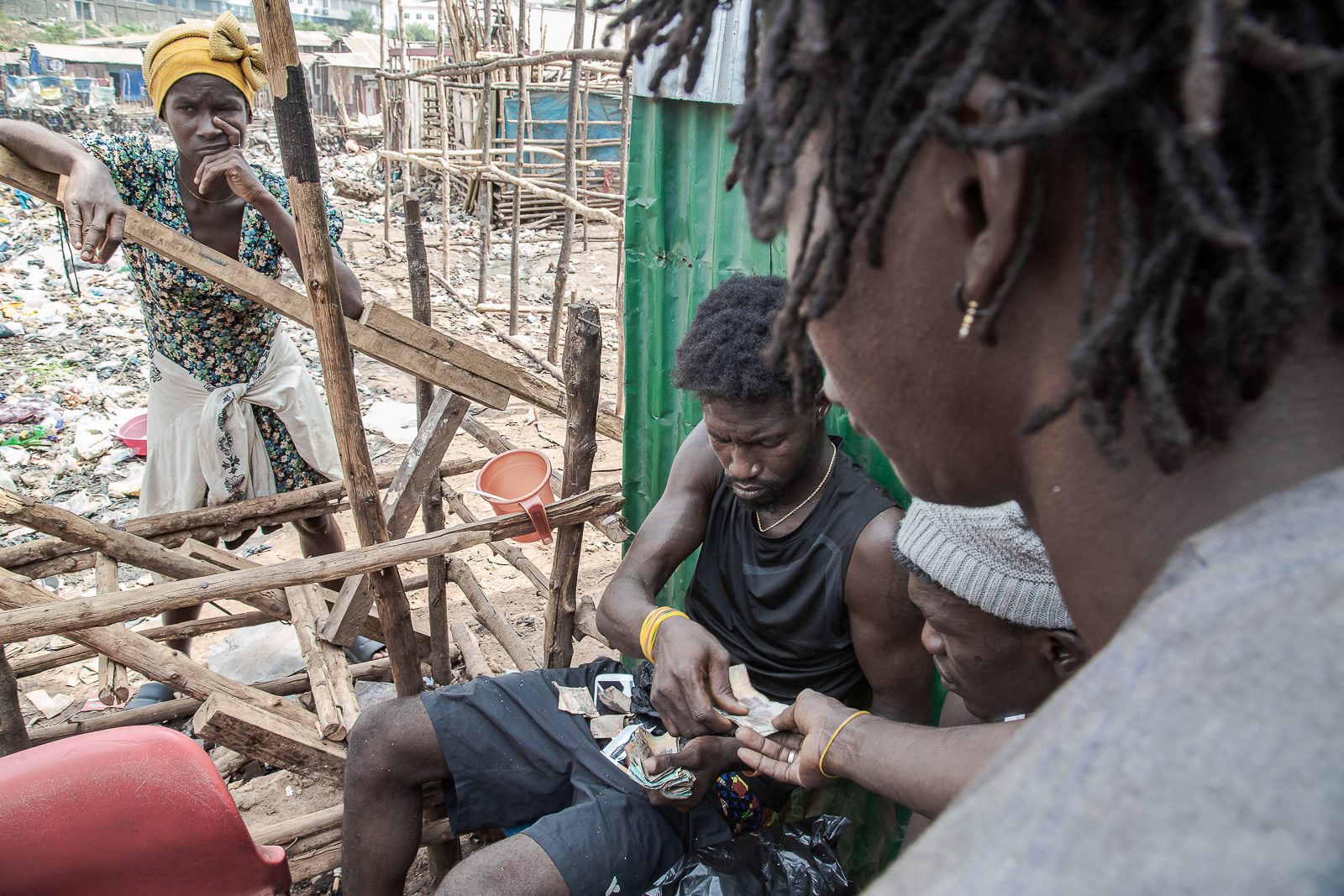
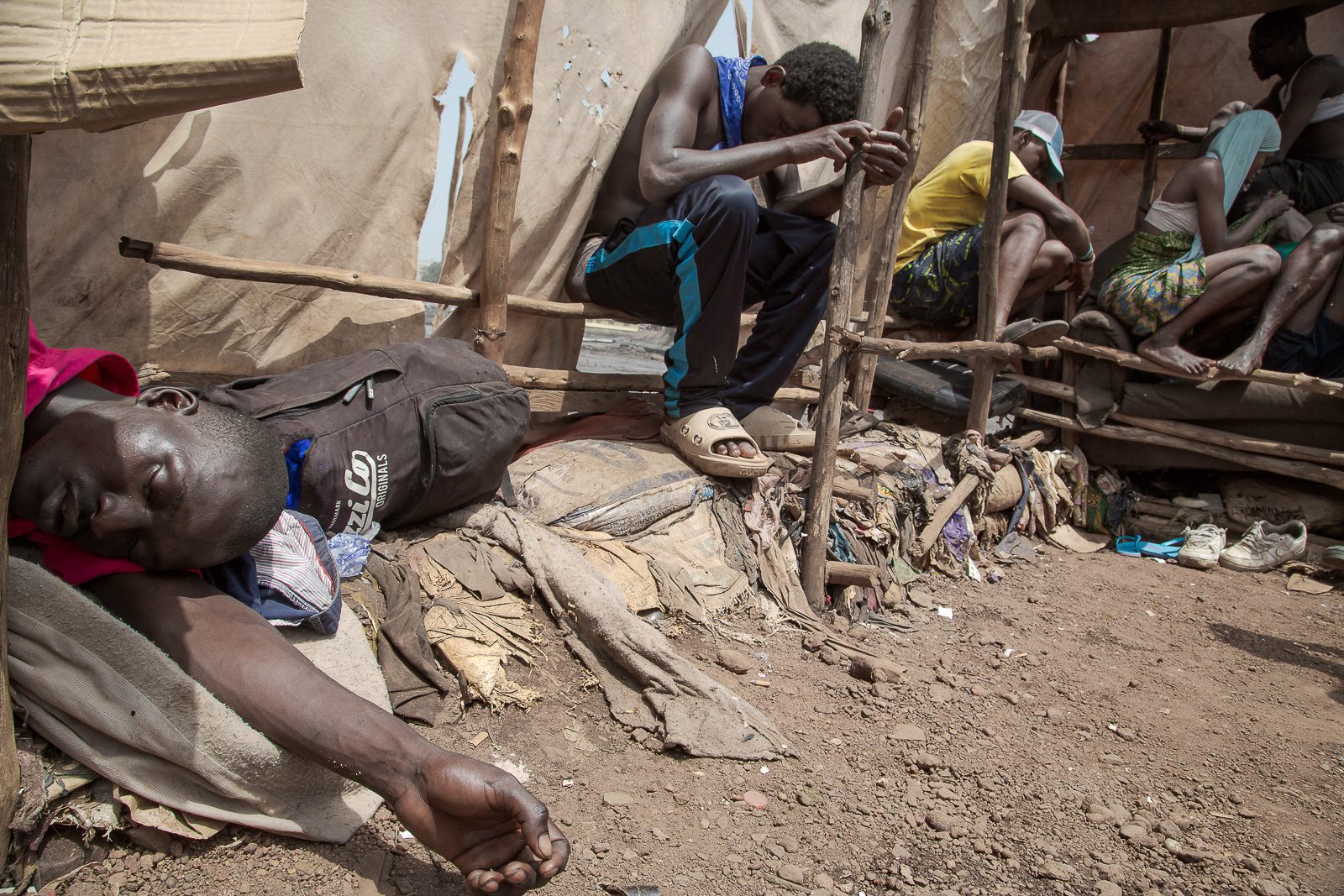
We make our way along these uneven streets, a patchwork of earth and concrete, hemmed in by homes thrown together from salvaged materials. At first glance, there seems to be a complete lack of basic services, and I’m not even sure the trickles of water I’m trying to avoid are actually water.
Fatmata, the young woman accompanying us, who lives here, walks with confidence. I have to keep my eyes fixed on the ground, watching every step to avoid knocking over bowls of food left on the ground, or bumping into chickens and children.
We have come back here to speak with I.
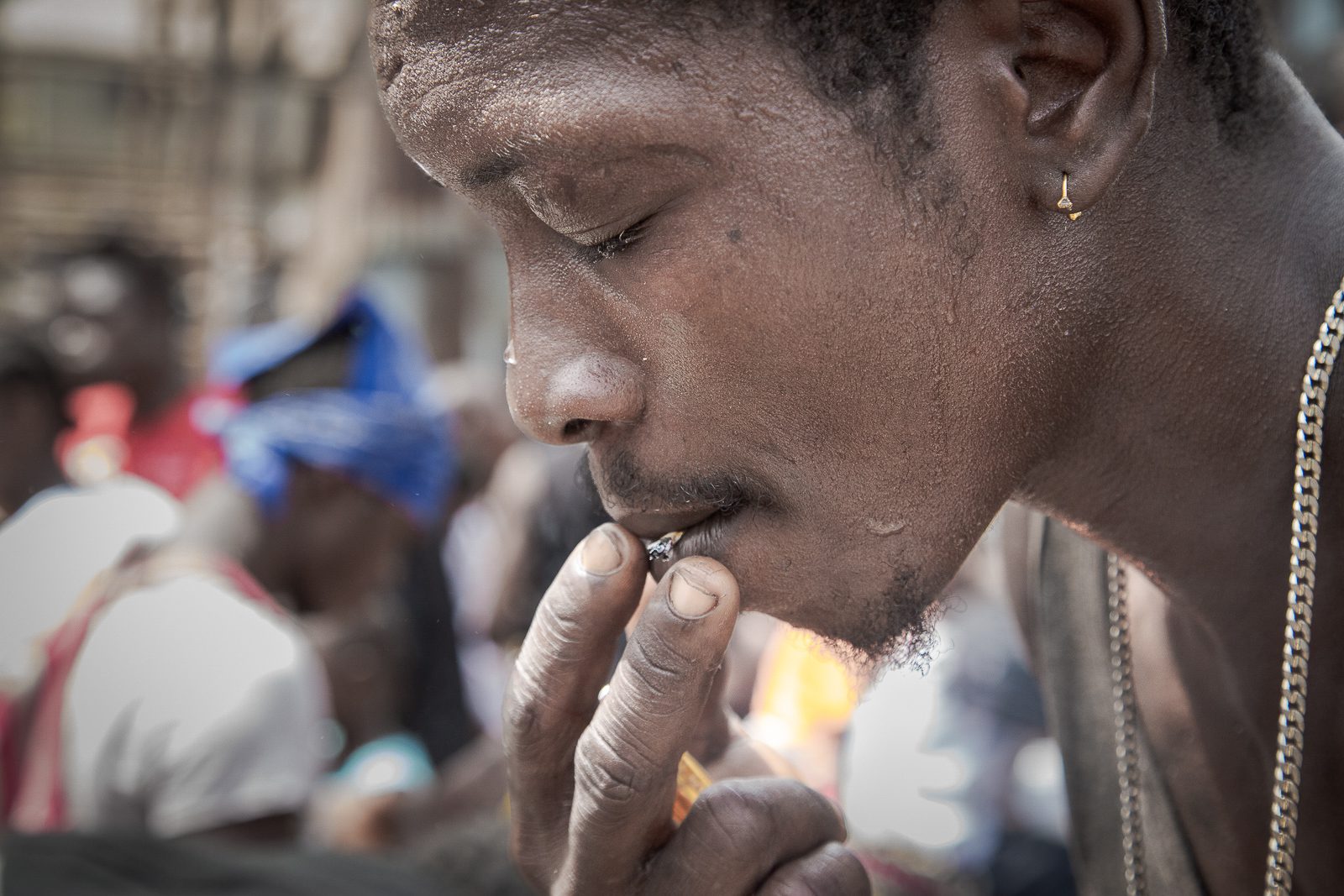
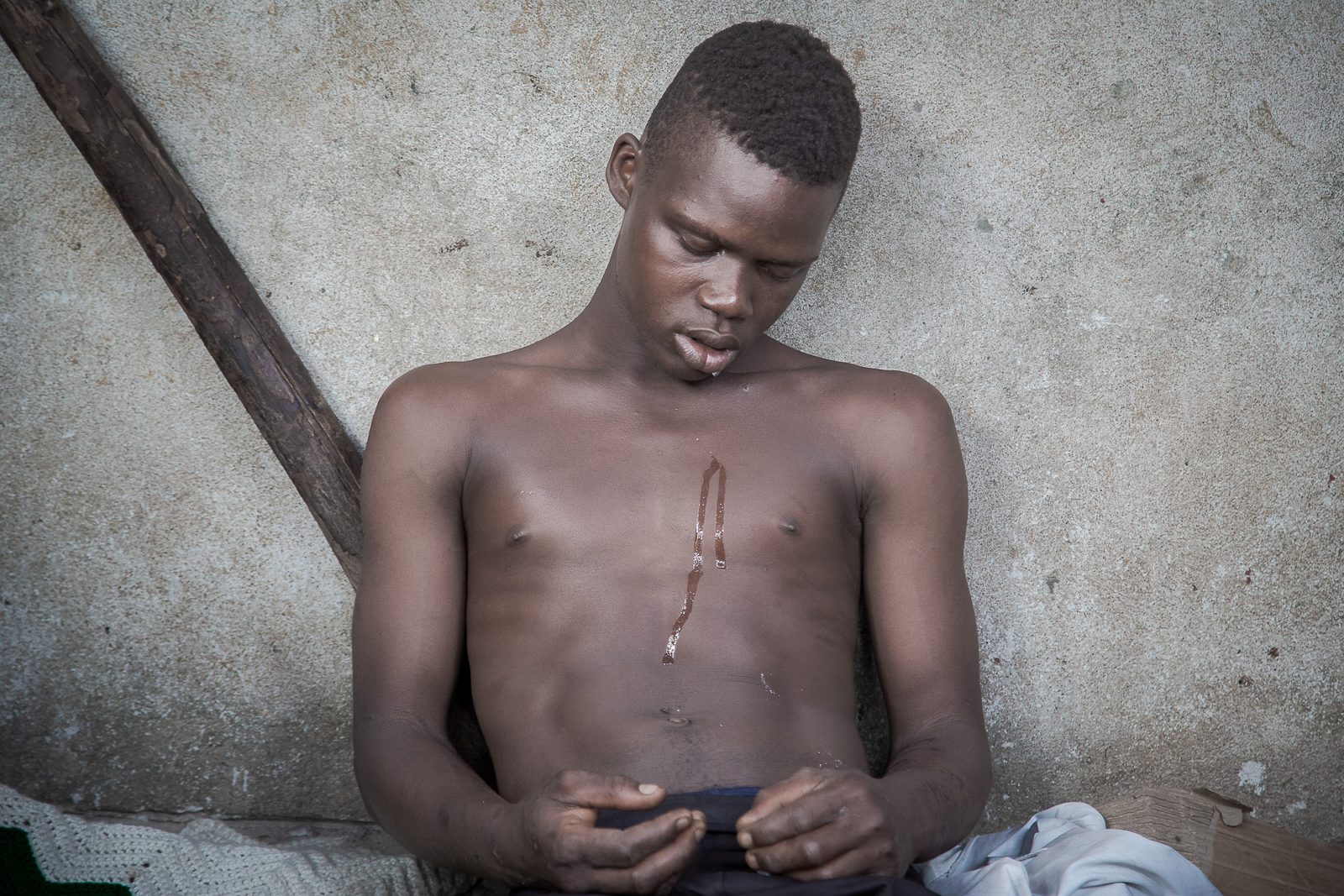
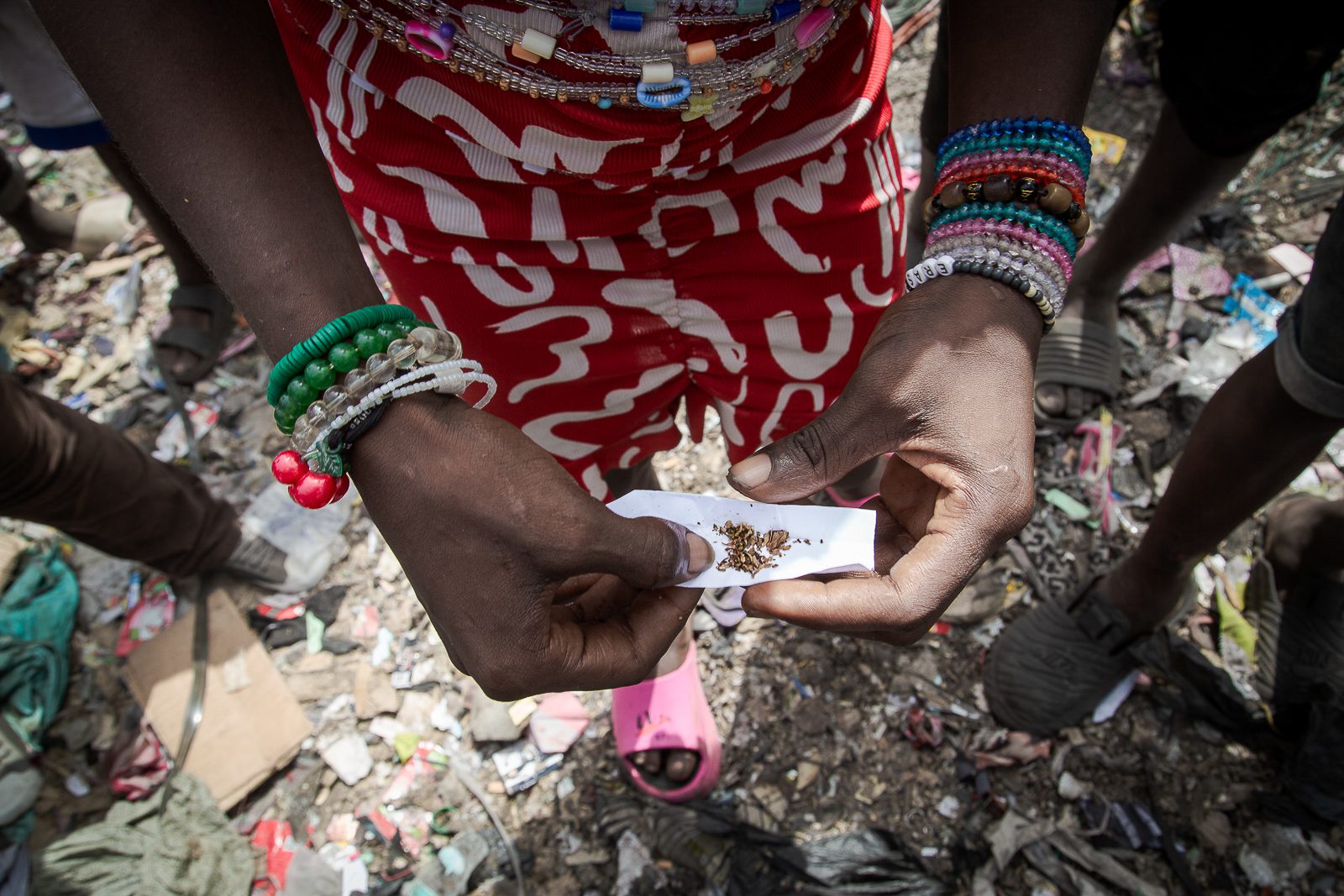
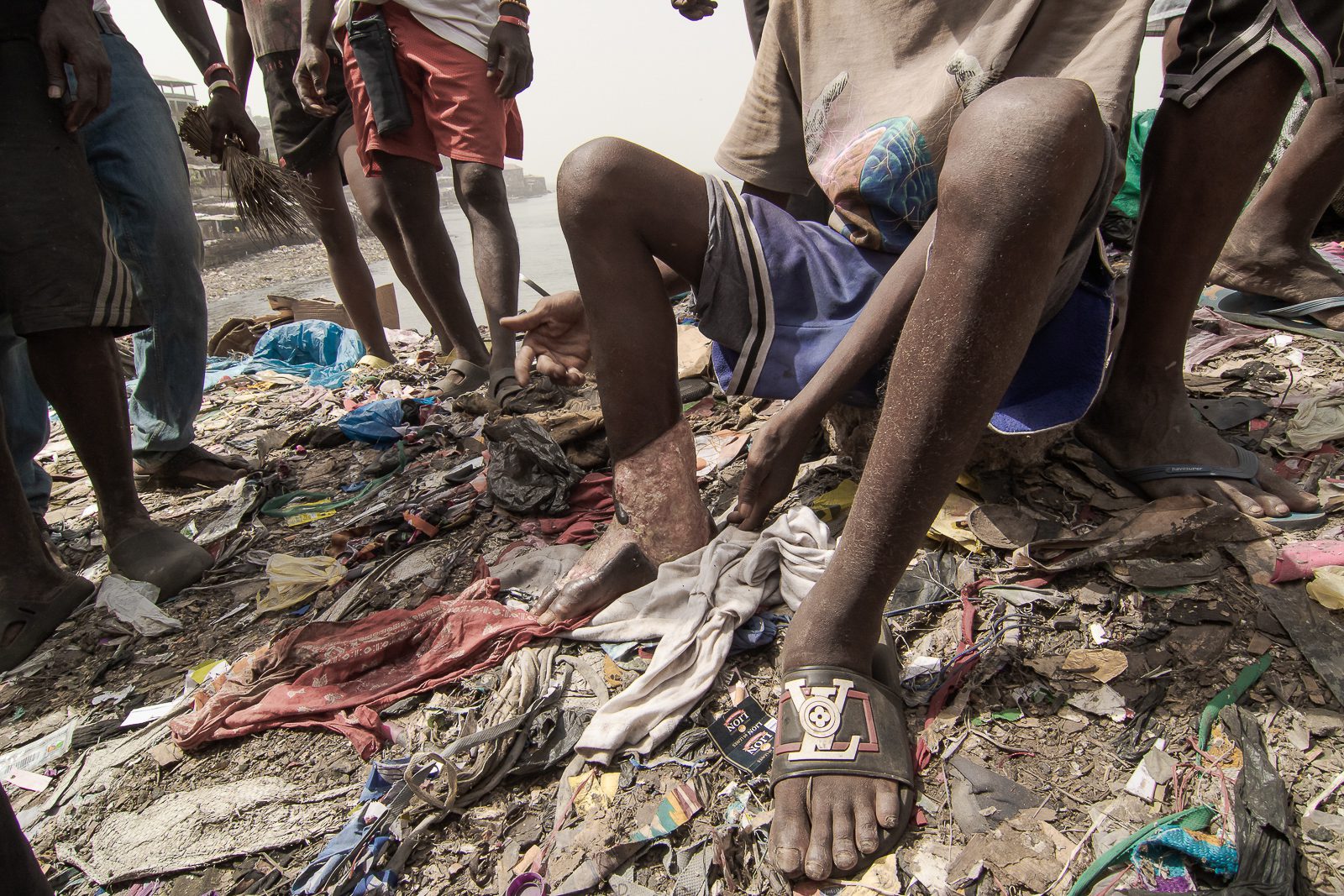
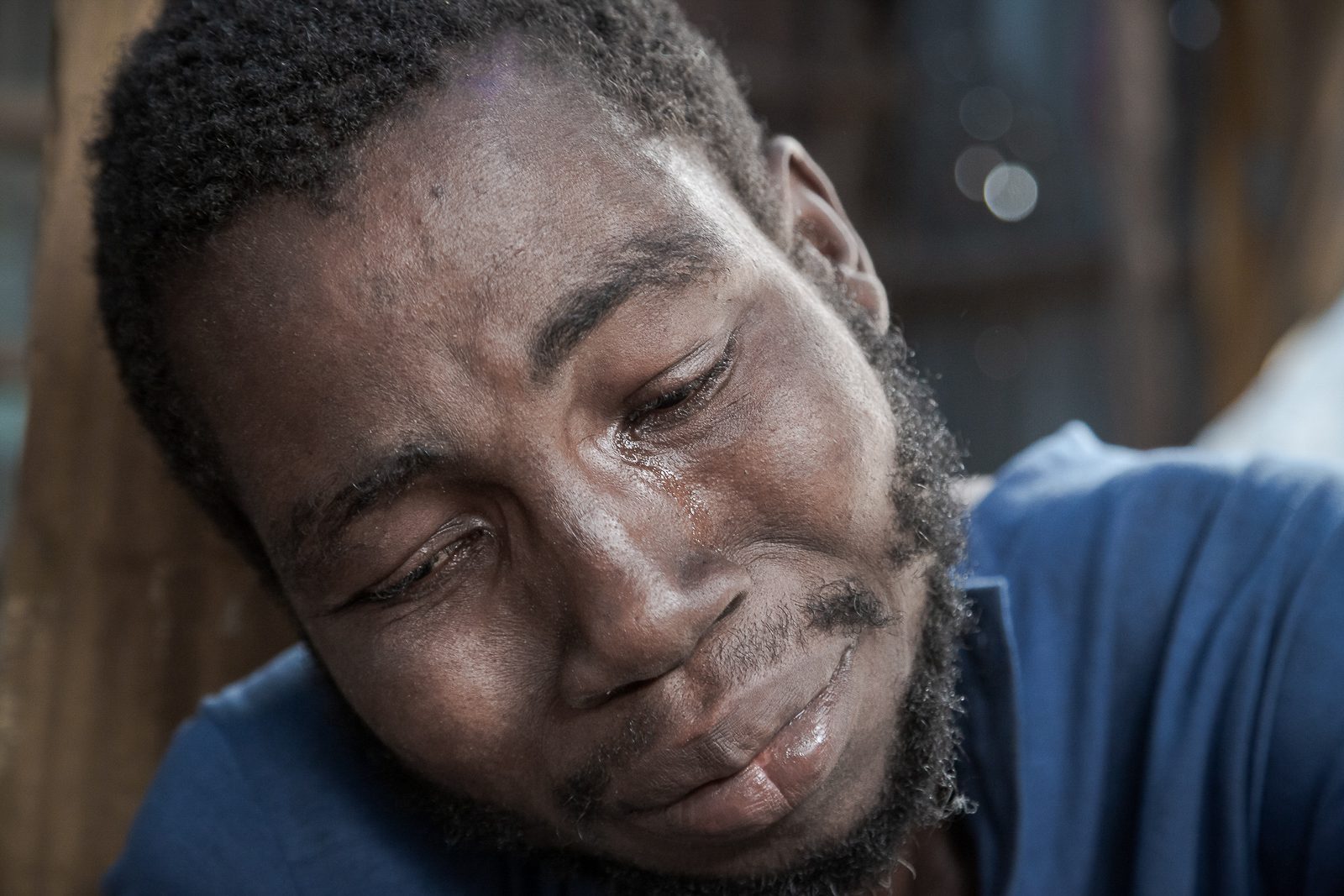
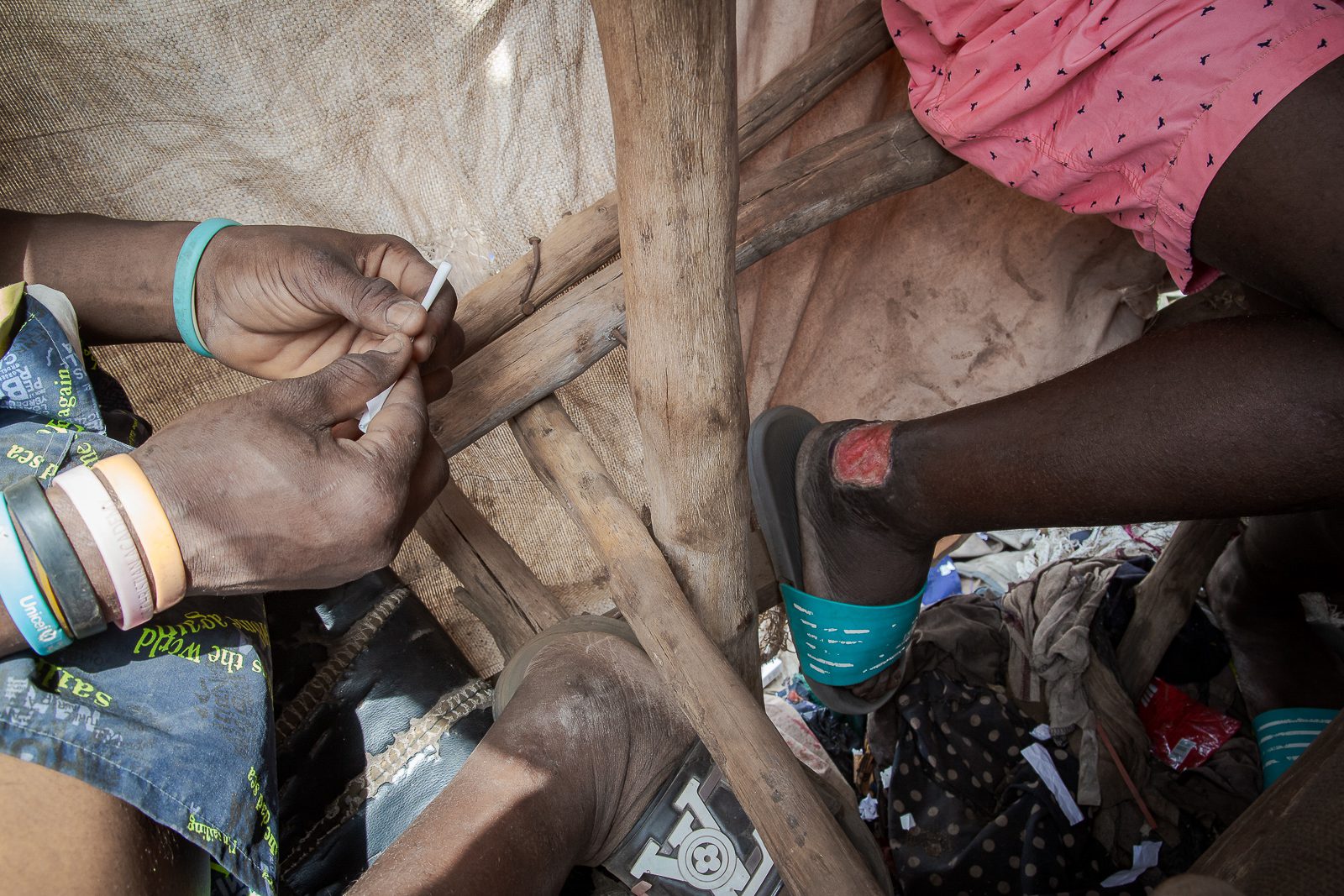
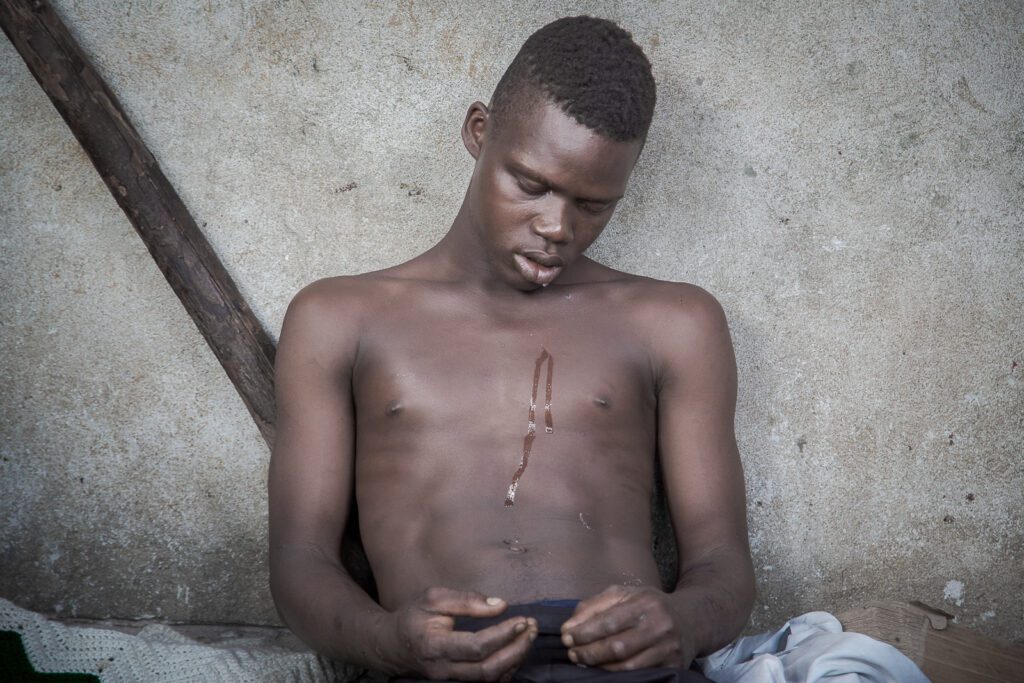
He is 27 years old and has been using kush since 2014. He. lost his parents some time ago. He has a sister, who lives with her family far from here and does not want him living with them. His condition has deteriorated since we first met him, just two days ago. His leg hurts and he can no longer walk, except for short distances. As he waits for his friend to return with the kush, lifts the hem of his jeans to check the wound, sending flies swarming around the infected fabric scattering into the air. The terrible sores caused by kush are most commonly found on the legs and feet, and are extremely painful. With no access to any form of treatment or wound dressing, the condition can only have worsened.
The kush arrives. I. needs it even just to find the strength to eat. He has had a bowl of rice bought for him, in exchange for the little money he made from selling objects salvaged from the rubbish dump next to the corrugated iron shack where he sleeps at night and spends his days.


A National Emergency
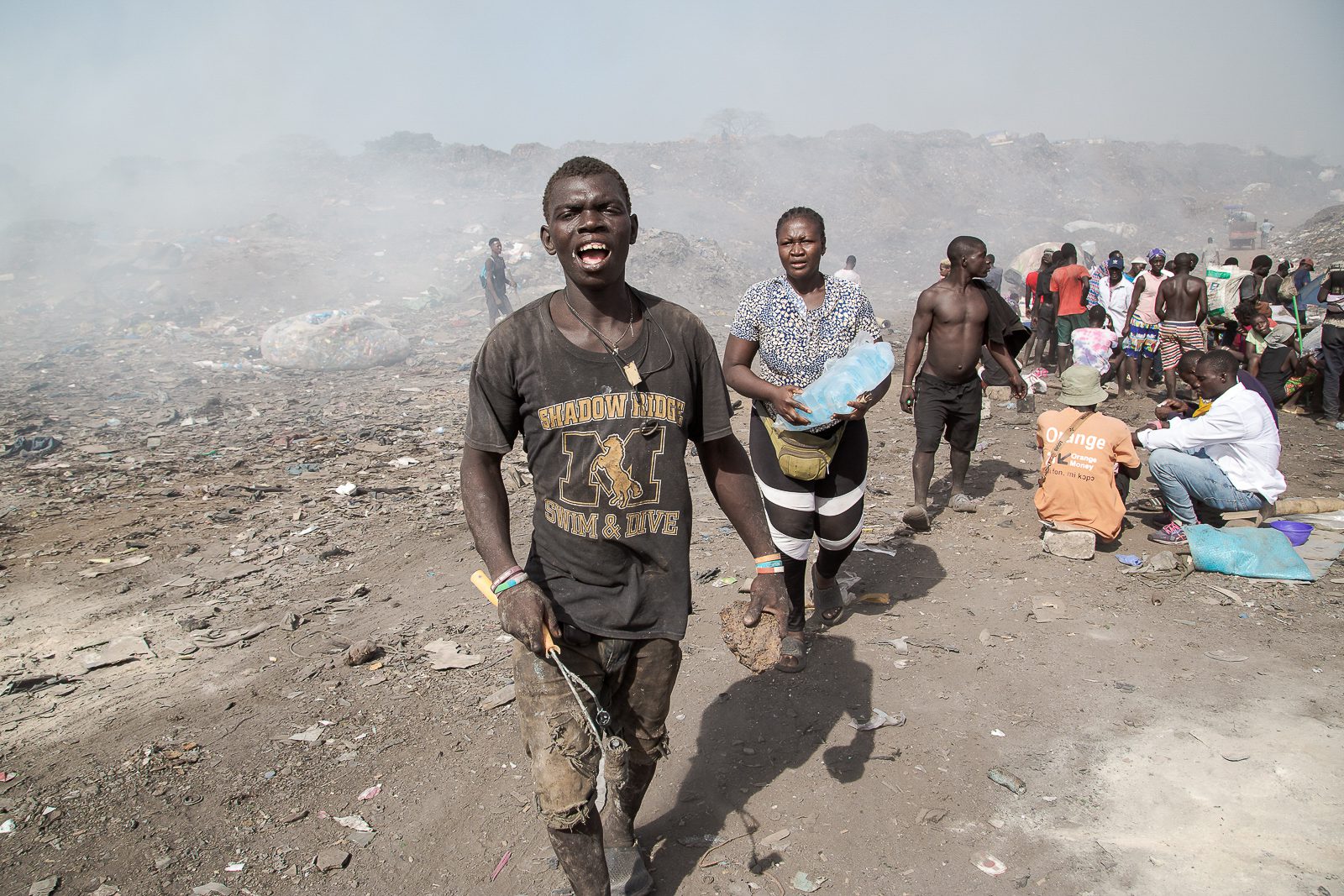
The Kush is a synthetic drug. It is cheap, devastating and highly addictive, with dependence developing almost immediately. Chemical analyses carried out in Sierra Leone in 2024 found that around half of the samples contained nitazenes, synthetic opioids as powerful as fentanyl. In April of that same year, Sierra Leone’s President, Julius Maada Bio, declared a national emergency.
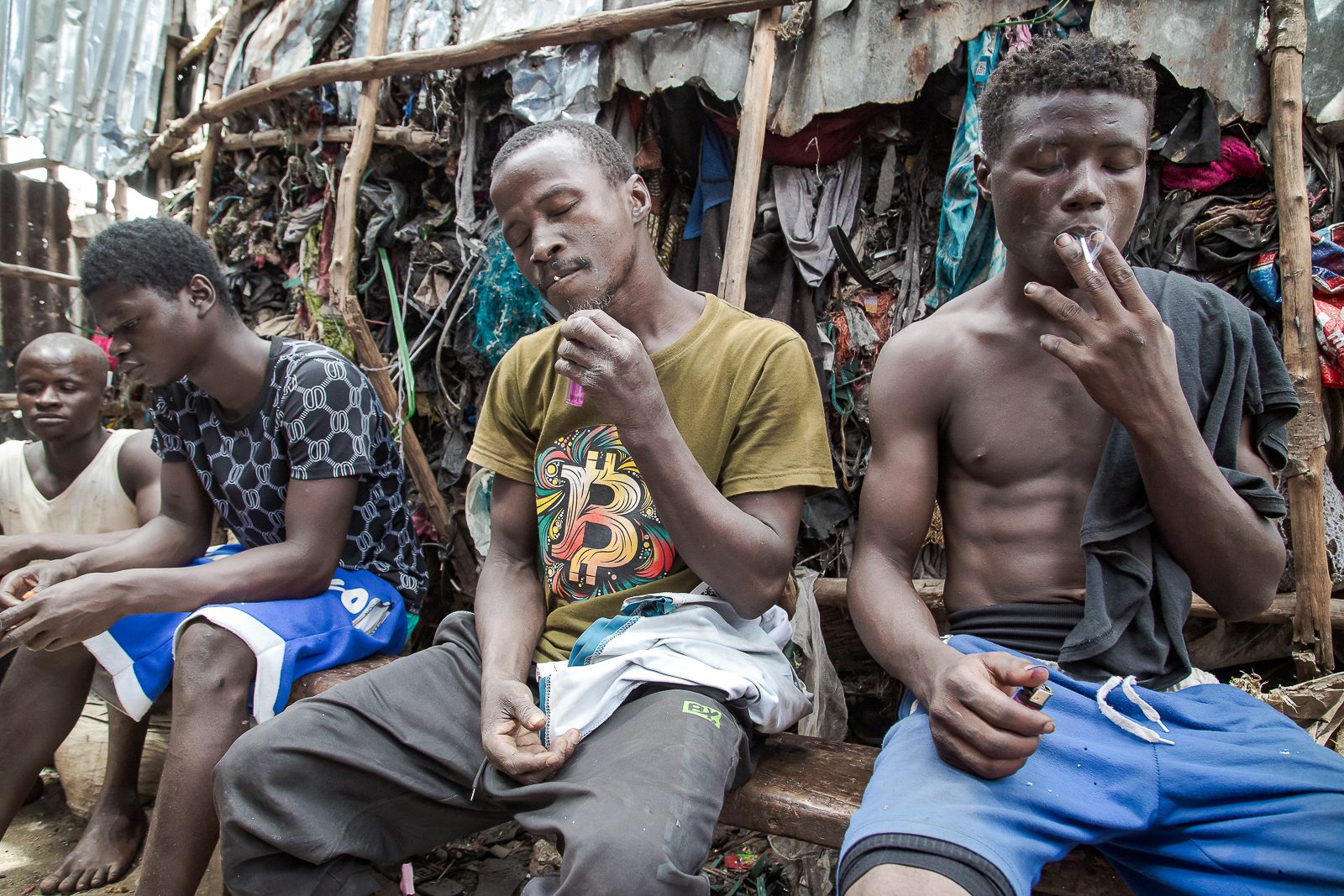
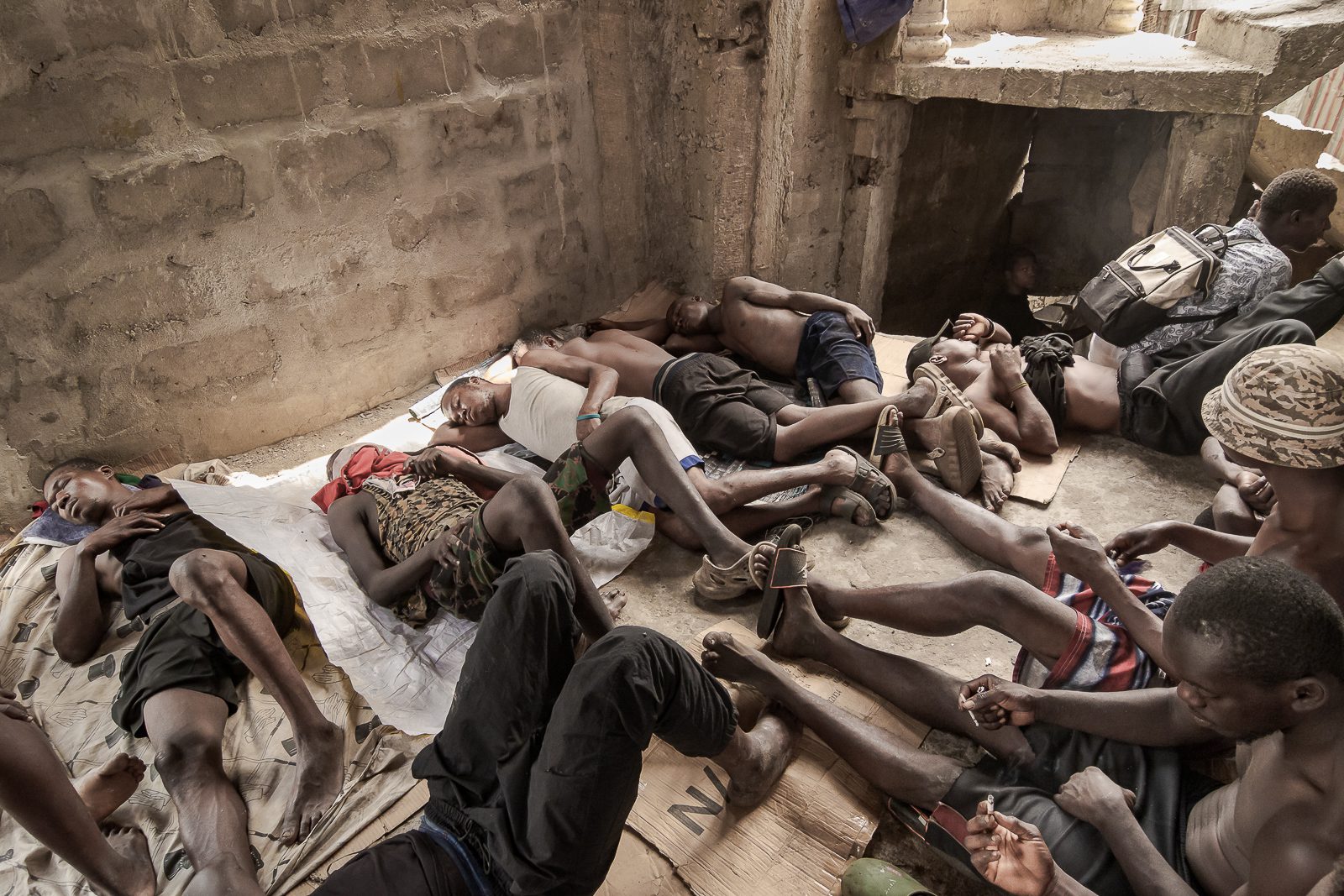
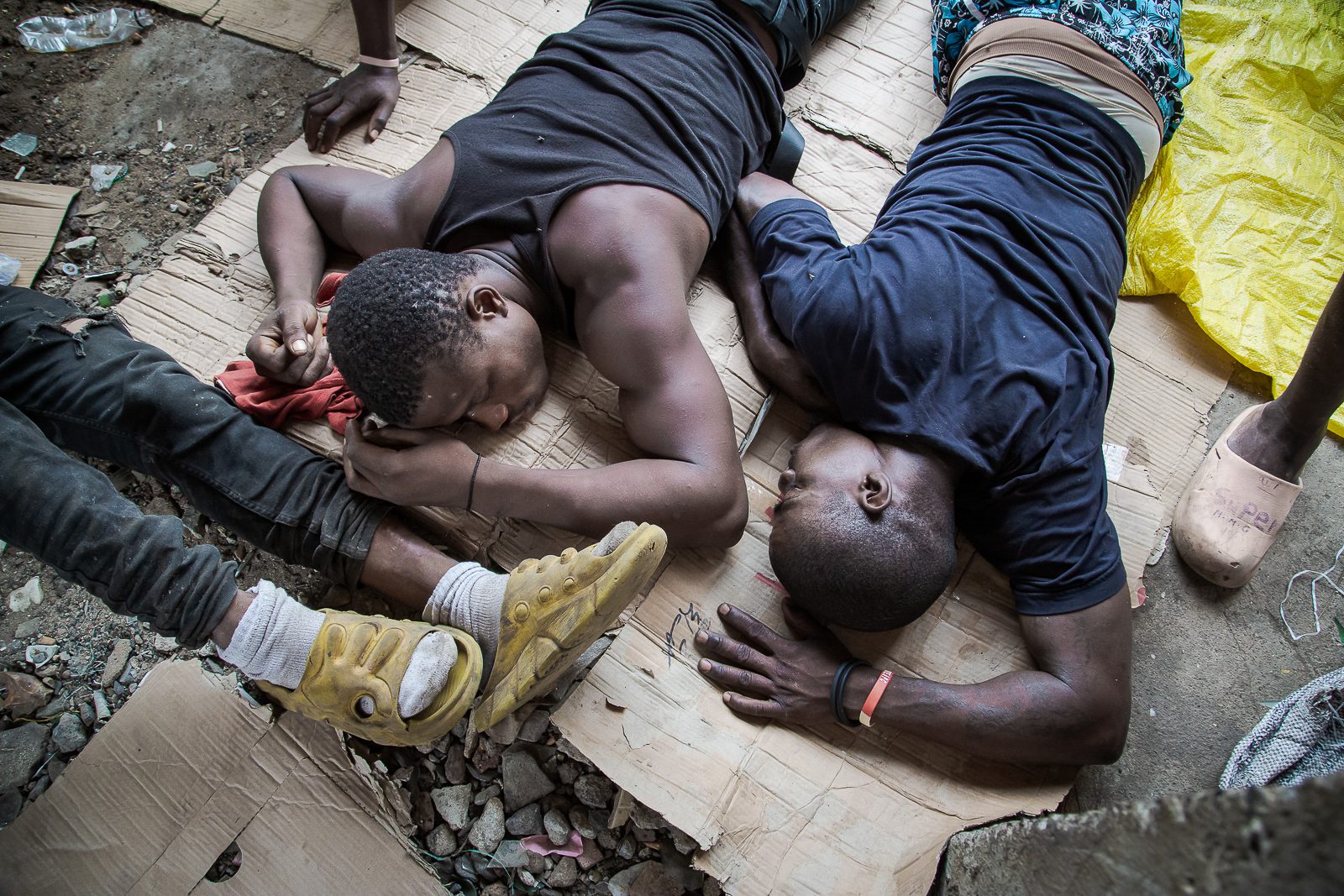
In the slums of Freetown, such as Susan’s Bay and Kroo Bay, many young people like I. spend their days in a state of trance. Their stories are different, but most kush users say they smoke to escape a reality marked by poverty, unemployment and a lack of any real prospects. The drug takes them into a “mad world” – as they call it -, is a state in which thoughts, stress and worries seem to drift away and cease to exist, for as long as the effects last.
In the places where kush is used, medical assistance is virtually non-existent. Rehabilitation centres, whether run by the government, NGOs or religious communities, could offer at least a limited response, helping to contain what has been described as a full-blown epidemic because of its widespread reach. But there are still far too few of them.
Sixteen Weeks
The room, with its exposed brick walls, is bare. There is little more than an empty table and a few chairs. The floor fan is switched off because the sky is overcast today and the temperature indoors is bearable.
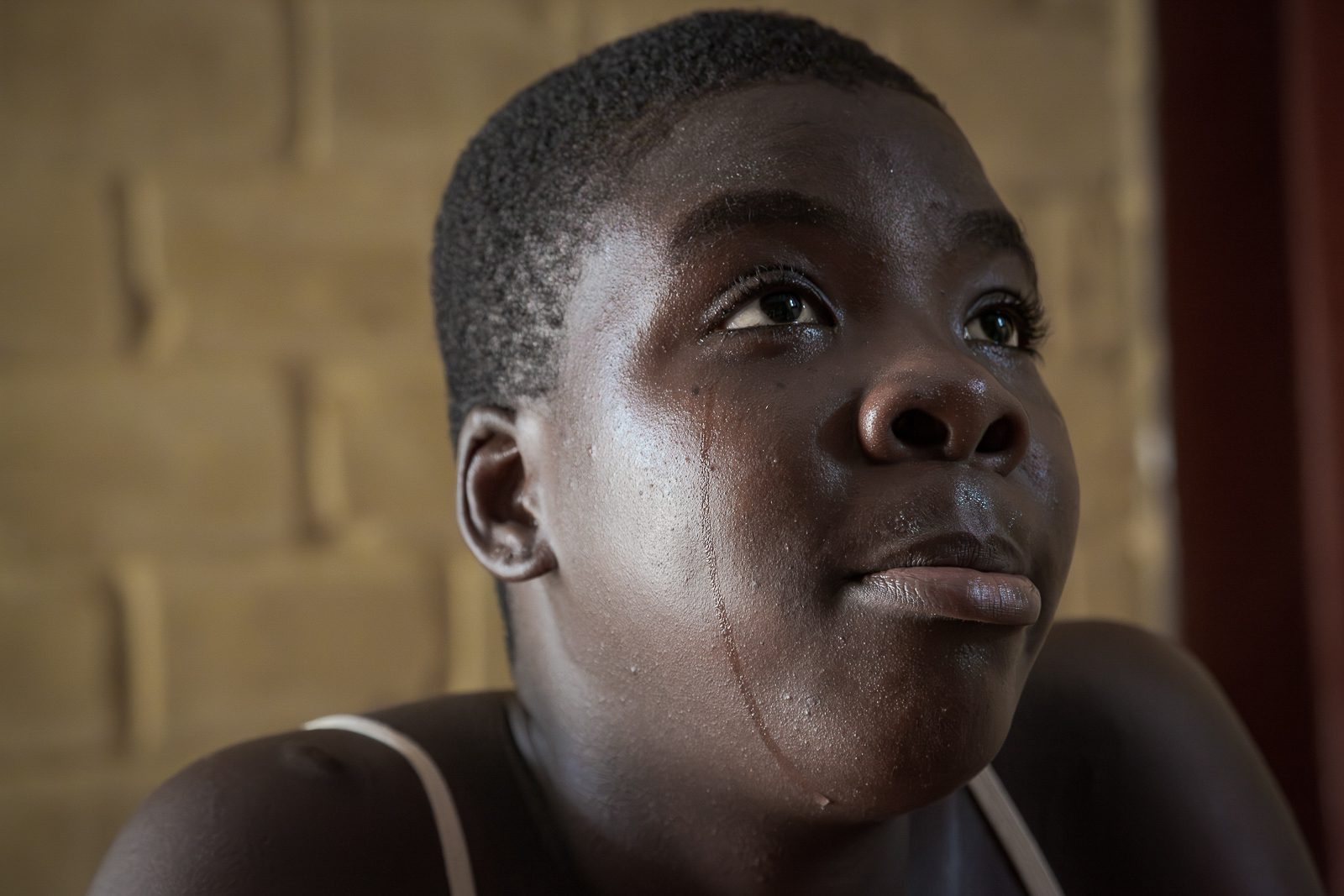
Sitting around the table, we listen to V.19, as she tells us her story, her gaze directed almost constantly towards the ceiling. She speaks in heavily accented, colloquial English that I struggle to understand. If I didn’t know why she was here, I might think she was telling us about her plans or her dreams, rather than recounting a terrible experience that no 19-year-old girl should ever have had to endure.
Her second child was born recently, but the baby is not here with her. At one point, she pulls down the strap of her vest top, bares one breast, squeezes it and produces a drop of milk.
For the entire time she will spend at the Centre V. will not be able to breastfeed her child.

V. is a resident at the rehabilitation centre for young women addicted to kush, established and run by Caritas Freetown. The facility is located around 30 kilometres from the capital. It is relatively new and was officially opened in 2025. For the time being, it can accommodate just 16 women (the wing intended to house an equal number of men is still under construction).
The rehabilitation programme lasts around sixteen weeks and combines medical care with psychological support. The women are also given practical training in agriculture, helping them reintegrate into society once they have completed the programme.
In practice, this centre represents one of the very few opportunities for young women in Freetown to break free from addiction. The girls are well aware of this and, during our visit, some of them manage to find a moment of lightness, joking and smiling in front of the camera.