

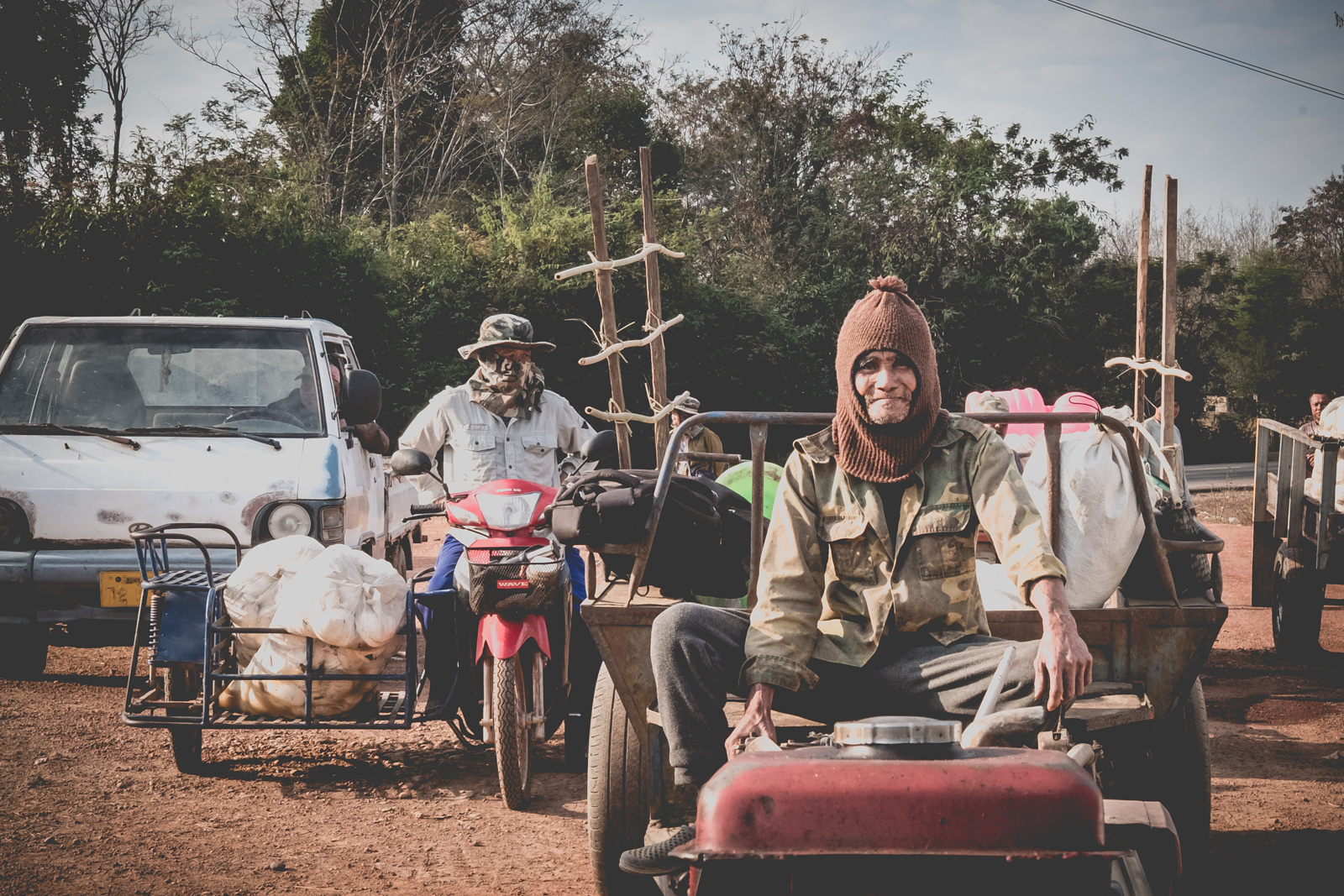

It is early morning in Isaan. And once again, the 13 degrees bite into the skin. It is cold — at least by local standards. Even the locals seem displeased, dressing stray dogs in brightly coloured sweaters so they are not left at the mercy of the night. I too, coming from the north, have spent weeks wandering night markets in search of something suitable for these unusual temperatures. Without success. Unless I wanted to emulate some bottom-of-the-charts Korean K-pop group. Which did not seem appropriate.
In the end, I gave up. It will get warm again in a few weeks, I thought. But two months on, I am still waiting. Confidently, I tell myself, it will come. In the meantime, the market has become home.
Khaw heniyw na maa is the first message of the morning, almost unexpected. I smile.
We met during Songkran (the Thai New Year), and more than ten months have passed since that day. My Isaan has become just enough to get by, but certainly not to hold a conversation. Her English has never existed. And yet we talk, and sometimes we understand each other. Many other times, we do not. But we are still here, both of us, without worrying too much about why. She says: karma. I say: why not.
The first message of the morning, in a village in the Laotian hinterland along the banks of the great river, is an invitation to breakfast at her mother’s house. It is there that she now lives again, after leaving behind in Thailand a life that was consuming her. And the father of her son, now a teenager, whom Covid took from her.
A breakfast awaits me of sticky rice, meat, perhaps fish, or both; vegetables that will never see the inside of a MasterChef kitchen (thankfully, I think), and certainly some strange, fiercely spicy mixture to bind all the flavours together. Coffee — black, bitter, hot, watered down, so dear to me — is not on the menu. But I can count on BeerLao, which cures ailments and creates new ones. I will adapt. After all, there is far more pleasure in living discovery than in clinging to conviction or certainty. It could be a mantra. In fact, it is.
A couple of kilometres on a motorbike born during the war reminds me that everything must first be sought out, listened to, understood, and only then, eventually, assessed. Breathing in the dust of trucks and sandy dirt tracks along those few kilometres, I realise once again that we, from the global North, are far better at running through that list in reverse. Stopping at the very first point. Satisfied. Full of our own knowledge. We assess. And we judge. Too often without taking the time to understand.
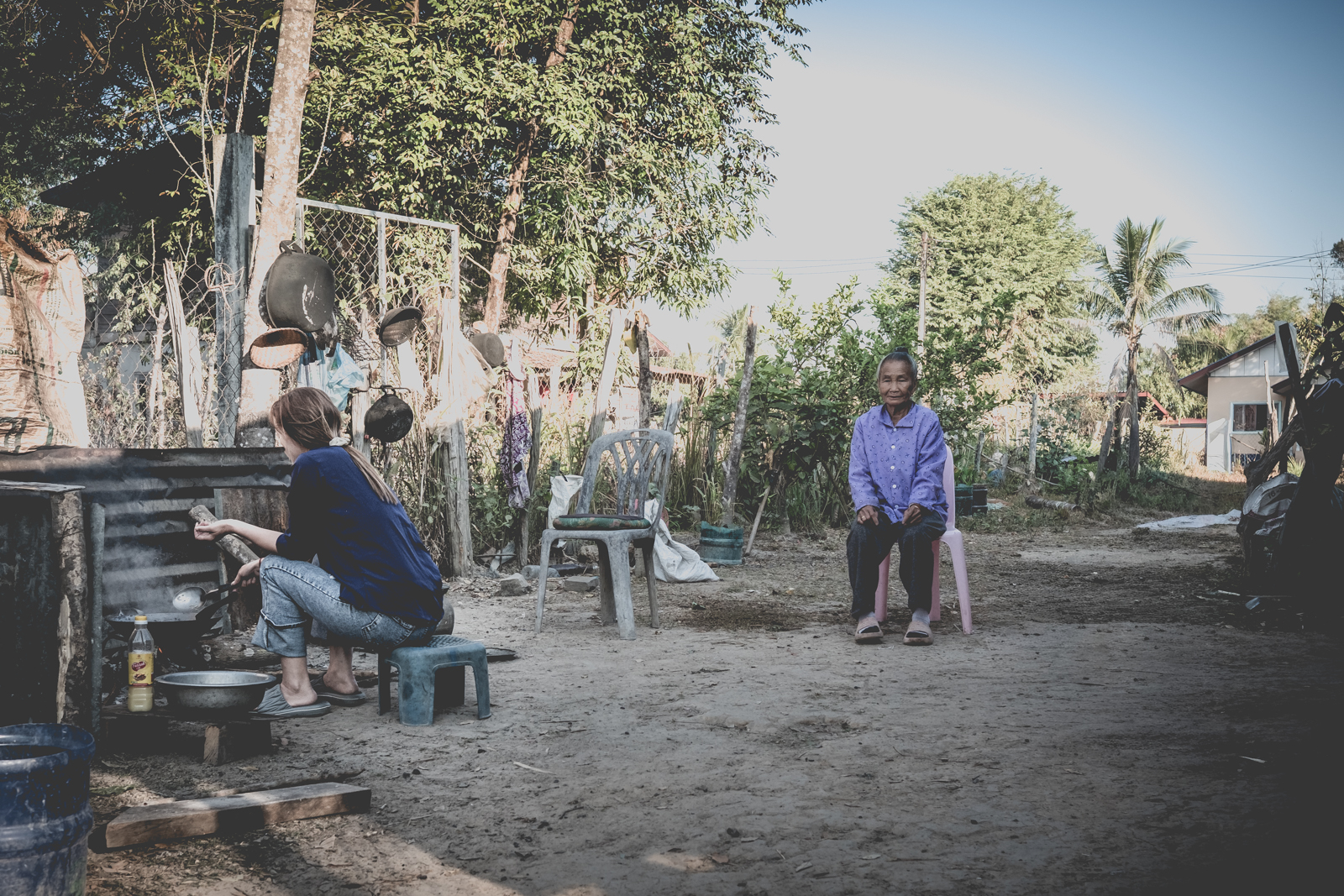
In Ban Thabôk, with barely twenty thousand inhabitants — more families than people — dust and plastic bags are cradled by the wind and by the wake of heavy trucks that cut through the village at full speed, without so much as a greeting. Resting along the spine of the country, on National Road 13, the town has no real centre, nor an urban core. Just a road, three temples, a small health centre, a petrol station, a few motels, a nightclub, and a market that is the heart of life. Rubber tree plantations, cassava, and little else. Almost twenty thousand breaths amid dust and sand. And the great river, the mother of all waters: the placid Mekong that flows on, irrigates the fields, shelters the Naga, and soothes the spirits.
Ban Thabôk does not represent the world, but it is a world. In the morning it wakes up, eats, produces, grows. In the evening it goes to sleep. And at night it loves, drinks, talks, lives and dies. Here too, some people flee the land: those who decide that the fields are not destiny and look for it elsewhere, behind the doors of trucks stopped for a night of bum bum, or in minivans bound for the capital, ninety kilometres away. Painted nails on men in search of self-affirmation. Strong arms heading north: factories, construction sites, roads. The Middle Kingdom devours, and does not give back.
But every man and every woman is shaped by their own climate, their own road, their own losses. There is no model to export. There are worlds. Each with its own grammar, its own wounds, its own provisional solutions. We, from the North, call a lack what does not resemble our standards. And we call it a solution when it does. It is the same shortcut: judging before listening.
National Road 13 continues to cut through Ban Thabôk, the trucks continue not to greet, the Mekong continues to do its ancient work. And once again I realise that the world has no need of our certainties. That every world is enough unto itself.
The world is full of Ban Thabôk that do not ask to be saved, but simply to be seen for what they are. And perhaps, for once, we should accept that our way is not the way. It is only one of many possible ways.
The heat has returned to Isaan. As expected. Meanwhile, the market continues to be home.
