In Africa, for women living in rural areas, giving birth at home is not merely the only option left by the lack of nearby facilities. In many cases it is also a deliberate choice. Over the course of my project BIRTH IS A DREAM, on maternal health in Africa, I have seen women forced to settle into overcrowded wards, alone, sleeping on the floor as they waited to give birth — sometimes for weeks on end.
That is how I came to understand why many women may fear the way they will be treated in healthcare facilities. In maternity wards, any form of privacy is often absent. These young mothers find themselves giving birth side by side, sometimes completely naked and assisted only by male staff, while exhausted nurses scold them for screaming too much from the pains of labour.


Home birth, by contrast, while carrying greater risks, offers a more intimate, respectful, and familiar setting. Caring for women before, during, and after childbirth are the traditional midwives, the Traditional Birth Attendants (TBAs). These figures have no formal medical training, but they command trust and authority within their communities.
While I was in Kabale, Uganda, I met a TBA named Alice. Following and documenting her work was a demanding experience, yet at the same time a deeply significant one. Talking with Alice, watching her at work, explaining to her why I wanted to document a home birth allowed me to enter this world in all its complexity.
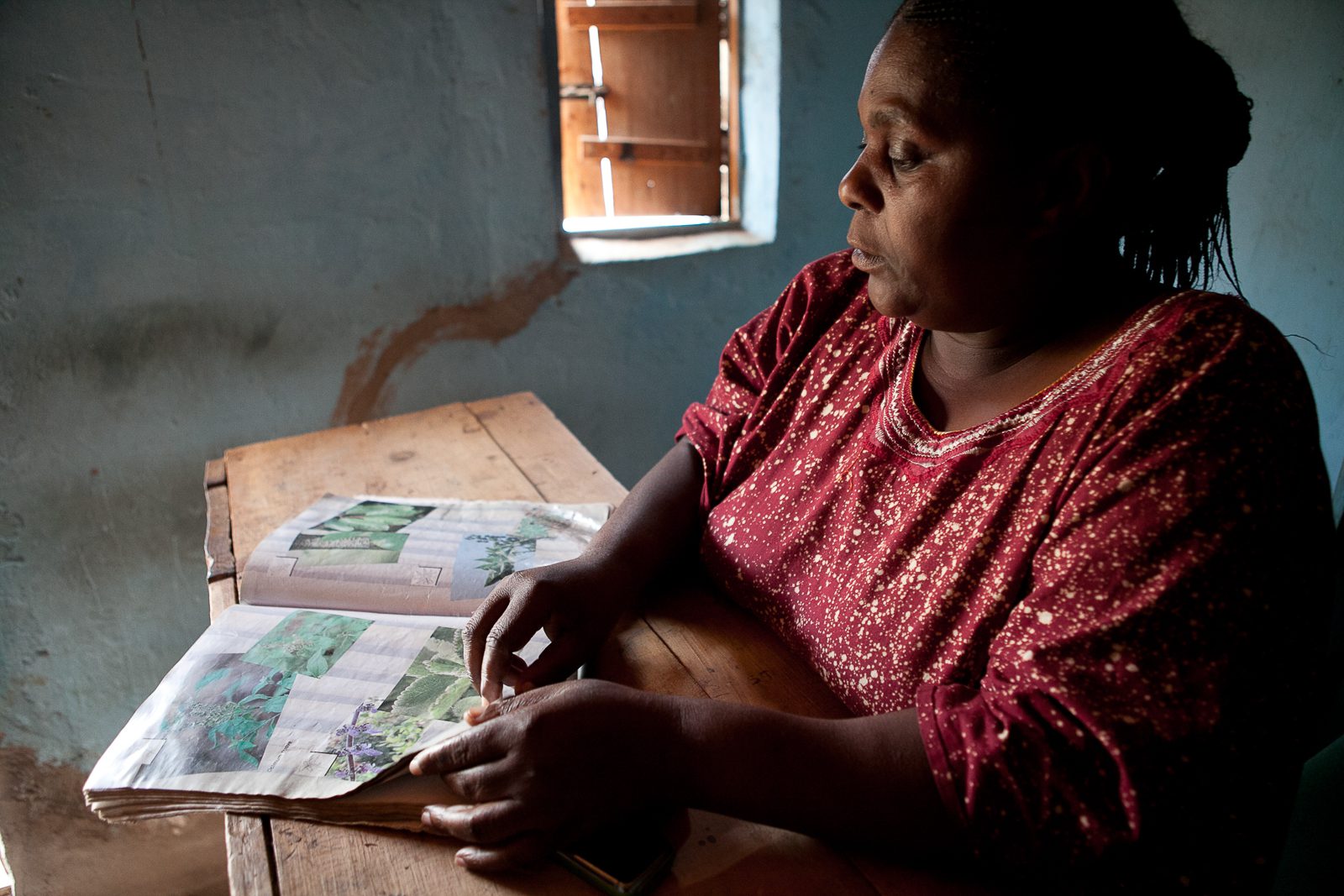
Alice is a traditional midwife who welcomes mothers from all over Uganda, women who prefer to give birth at home rather than in public healthcare facilities. Alice told me she had been trained in traditional medicine by her grandmother, learning to use medicinal herbs to prevent various illnesses, infections, and malformations, and also to ease pelvic pain during childbirth or to induce labour.


One day a woman arrived for a visit, using a motorcycle taxi to get there, and when Alice explained to me who she was, at first I was astonished — yet it was nothing more than confirmation of what I had already seen. This woman was a professional obstetrician who had nonetheless chosen to give birth at home, because here she felt respected, listened to, and protected, more than in the hospital where she worked.
After I had been in Kabale for a week, the phone rang. It was Alice, telling me: ” aolo, you can come — there’s a woman who is due to give birth today. I explained to her why you’d like to attend her birth with me, and she said she agrees. I told her that you have my trust. ”.
And so it was that, inside and outside a room of her house, used as a home delivery room, for five hours I had the chance to follow the entire labour, watching how Alice cared for the young mother at every moment, right up to the birth of her child.